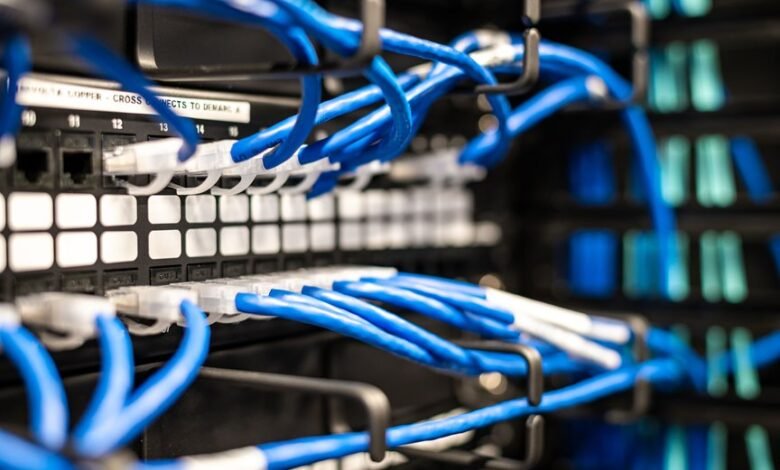
The 0.0.17 Private IP Address Configuration Guide presents a structured approach to private addressing, emphasizing isolation, predictable routing, and centralized management. It outlines planning for subnets, ranges, and sizes aligned with expected hosts and segmentation, then guides step-by-step device configuration, including gateway sequencing, deterministic allocations, exact netmasks, and disabling conflicting DHCP. Best practices establish fixed sequencing and centralized records for deterministic operation, while validation, troubleshooting, and scaling depend on standardized checks and cross-vendor consistency—a path that invites careful consideration of the next steps.
What Private IPs Are and Why They Matter
Private IP addresses are numeric identifiers assigned to devices within a private network, isolating internal traffic from the public internet.
The concept enables predictable routing, centralized management, and scalable growth.


This guidance clarifies private addressing misconceptions and emphasizes private IP traffic isolation as a design principle, ensuring security boundaries, controlled access, and freedom to architect resilient network topologies without exposing internal resources.
Plan Your Private Addressing: Subnetting, Ranges, and Size
Plan the private address scheme by selecting appropriate subnets, ranges, and sizes that align with anticipated host counts, growth, and segmentation requirements. The guidance emphasizes disciplined subnet planning and deliberate address allocation. Budget for future expansion, avoid overlap, and document scope. Maintain scalability, security, and clarity while preserving freedom of design, ensuring flexible, efficient routing and straightforward subnetting across networks.
Step-by-Step: Configure Private IPs on Common Devices
With the private addressing framework established, this section provides a practical, device-by-device procedure to assign private IPs consistently.
Each device follows a fixed sequence: identify gateway, select subnet-aligned addresses, document allocations, apply exact netmask, disable conflicting DHCP, and verify connectivity.
Adhere to best practices, maintain centralized IP allocation records, and ensure deterministic assignments for predictable, freedom-oriented network operation.
Validate, Troubleshoot, and Scale Private IPs Across Systems
To validate, troubleshoot, and scale private IP deployments across diverse systems, the process begins with standardized verification checks, centralized logging, and deterministic mapping between devices, subnets, and gateways.
Privacy auditing measures ensure ongoing compliance, while cross vendor consistency is enforced through documented interfaces and shared schemas.
Continuous monitoring, reproducible configurations, and rapid rollback capabilities solidify dependable, scalable private IP operations.
Frequently Asked Questions
How Secure Are Private IPS Against Internal Threats?
PRIVATE IP security varies; internal threats remain mitigated through robust network segmentation and access controls. The model emphasizes internal threat modeling to identify risks, enforce least privilege, monitor anomaly behavior, and continuously audit configurations for resilience.
Can Private IPS Work With Ipv6-Only Networks?
Private IP feasibility: yes, private addresses can function alongside IPv6-only networks through translation and dual-stack strategies, though full IPv6 co existence requires careful planning. The approach preserves freedom while ensuring compatibility, security, and address management across environments.
What Are Common Edge Cases for NAT With Private IPS?
Edge case NATs arise when private IPs collide or fail to map due to dynamic pools, fragmentation, or asymmetric paths; these are common private IPs pitfalls, requiring careful translation tables and explicit egress policies to prevent leakage and disruption.
How Do Private IPS Affect DNS Resolution Performance?
Private IP performance may subtly affect resolution latency, contingent on local caching and route proximity; private IP DNS caching reduces repeated lookups, but assumes stable internal records and constrained external exposure for optimal results.
Are Private IPS Compatible With VPN and SD-WAN?
Private IPs are compatible with VPNs and SD-WAN, provided proper routing and addressing schemes are configured. Private IPs with SD-WAN enable secure, scalable connectivity, while Private IPs and VPNs require consistent policy-based traffic handling and identity management.
Conclusion
Private IP addressing, when planned with fixed sequencing, deterministic allocations, and centralized records, yields predictable routing and scalable networks. The theory—that structured subnets and gateway sequencing reduce misconfigurations—holds true in practice: standardized checks, consistent schemas, and centralized logging expose issues early and enable rapid remediation. By enforcing non-overlapping ranges, precise netmasks, and disabled DHCP conflicts, operators achieve reliable, auditable deployments, while scalable growth remains constrained by disciplined documentation and cross-vendor consistency.