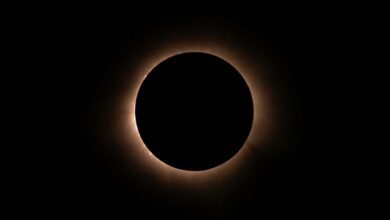
Cosmic Beam 656121146 Dynamics examines the propagation and transformation of a high-energy emission within varied media. The framework analyzes transport, energy transfer, and temporal evolution under the influence of ionization, heating, and magnetic perturbations. It links spectral features to underlying processes such as turbulence and remnant acceleration. Environmental shaping by voids and fields suggests intricate feedback on cosmic structures. The implications prompt further scrutiny of where such beams origin and fate intersect.
What Is Cosmic Beam 656121146 Dynamics?
Cosmic Beam 656121146 Dynamics refers to the study of how a specific high-energy emission, designated by the identifier 656121146, propagates, interacts, and evolves within a given physical environment.
The analysis treats propagation paths, energy transfer, and temporal evolution with rigor. It emphasizes cosmic beam behavior, dynamics interplay among fields, particles, and media, and implications for space shaping.


How Do High-Energy Cosmic Beams Shape Space?
High-energy cosmic beams interact with astrophysical environments through a sequence of processes that collectively reconfigure local conditions. They drive ionization, heating, and magnetic perturbations, altering chemical pathways and energy budgets. This cosmic interplay reshapes ambient plasma, influencing structure formation and feedback cycles.
Spectral mapping links emitted signatures to transport, enabling constraint of interactions while preserving interpretive clarity and scientific freedom.
Observing Beams: Magnetic Fields, Turbulence, and Remnant Acceleration
Observations of beams rely on disentangling the intertwined roles of magnetic fields, turbulence, and remnant acceleration as tracers of transport and energy transfer.
Systematic measurements quantify magnetic turbulence spectra and field orientations, linking fluctuations to transport efficiency.
Remnant acceleration indicators corroborate energy partitioning, while cross-validation with turbulence diagnostics clarifies coupling strength and confinement, supporting a precise, freedom-forward interpretation.
What the Data Reveal About Cosmic Voids and the Universe’s Rhythm
Exploring the data on cosmic voids and the universe’s rhythm follows from the established focus on how magnetic fields, turbulence, and remnant acceleration mediate transport and energy transfer.
The analysis reveals cosmic rhythms shaping void dynamics, with magnetic turbulence modulating beam acceleration patterns and sustaining large‑scale coherence across sparse regions, clarifying transport constraints and energy distribution in the cosmos.
Conclusion
In the quiet arithmetic of the cosmos, Cosmic Beam 656121146 dynamics acts as a patient compass. Its path, a ledger of energy traded for matter, maps how fields bend, particles scatter, and voids whisper back. The data cohere into a symbolic clock: ionized halos as glowing metronomes, turbulence as random punctuation, remnant acceleration as repeated echoes. Together they render a precise rhythm—space’s hidden mechanism—where environments sculpt motion and motion, in turn, reveals the universe’s enduring cadence.